Snowmobiles.org

  • Accessories
    • Apparel
    • Helmet
    • Gloves
    • Goggles
  • Manufacturers
  • Snowmobiles
  • Trails

Types Of Snowmobiles

September 3, 2021 by snowmobiles.org Leave a Comment

Snowmobiles are an essential requirement for people living in snow-covered areas. Just as people in cities need cars for commuting and travelling, people in snow-covered areas depend on snowmobiles. There are different types of snowmobiles available in the market today. Their features and specifications depend on the purpose they are designed for. Some snowmobiles are used primarily as transport vehicles while others are designed for utility aspect. Here are the different types of snowmobiles depending on their intended usage.

Choosing the Right Type of Snowmobile

The right types of snowmobiles for a rider will vary based on their individual requirements. Here are a few factors that can assist them in choosing the ideal sled type for their needs.

Purpose of Buying a Snowmobile

The right type of snowmobile for riders will depend on their motivation or purpose for buying the same. Most individuals purchase a sled for traveling from one place to another in snow-laden areas. Trail snowmobiles are ideal for their needs. Others employ them as utility vehicles for delivering mail to remote regions as well as towing a sled and hauling cargo for professional or personal tasks. Utility models are the suitable types of snowmobiles for their use cases. Many people like to undertake cross-country tours to areas that are covered under a sheet of ice or powder throughout the year, such as Alaska. 2-up and touring sleds are designed specifically for this purpose. Then there are riders that crave an adrenaline rush and want the leanest, meanest machines. Performance-oriented snowmobiles are their preferred option. Therefore, the right types of snowmobiles for riders will depend on their individual requirements. They must choose a model that fits their needs.

Terrain and Trail Conditions

The kind of terrain and trail that a rider will primarily cruise on will be a significant factor when determining the right types of snowmobiles. Riders can face varying snow conditions. Most of them will ride on well-groomed packed trails with gentle elevation. Others prefer to visit ungroomed trails or ride on deep powder in the backcountry. They may have to face hard ice while crossing frozen lakes or navigating unchartered territories quite a few times. People living on the mountains and sportspersons such as skiers will climb steep powder-covered slopes on their sleds. There are different types of snowmobiles for varying terrain and trail conditions. Sleds for mountains have powerful engines, while those designed for deep powder are lighter in weight and have broader skis. Riders may consider variants that are suitable for the trails and terrains that they will navigate.

Experience Level and Age

Riders must choose a snowmobile according to their experience. Performance-oriented models are harder to control and suitable for riders who have years of experience under their belt. Beginners should consider basic models that have standard engines and are easier to maneuver and steer. There are special types of snowmobiles available for young riders, termed youth snowmobiles. They are designed for teens and young adults, come with smaller engines, and have compact chassis. These sleds are meant for teaching them how to ride snowmobiles. Hence, the right types of snowmobile will also depend on the experience and age of the rider.

Number of Riders

Based on the number of riders, the types of snowmobiles can be classified as single-seater and 2-up models. The former are designed for one rider and have their engine and specifications designed accordingly. Riders, especially tourists and trappers, who want to hunt or travel in pairs but don’t want to take more than one sled with them can consider 2-up models. They come with two seats and are designed for carrying two persons, the rider and a passenger. Additional features, like hand warmers, are also present for two individuals. People buying sleds may want to consider the types of snowmobiles suitable for their requirements according to the seats available.

Trail Snowmobiles

Trail snowmobiles are one of the most basic types of snowmobiles. They are primarily meant for commuting and transportation. These models have narrow frames and small fan-cooled engines though they still have good acceleration and can reach decent top speed. Trail snowmobiles are lightweight and easy to handle making them the ideal choice for new riders or beginners. They are the most affordable offerings when compared to other types of snowmobiles.

Touring Snowmobiles

A touring snowmobile is designed to carry a passenger in addition to the rider for long distances. They come with an extra seat, also referred to as “2-up”. They have comfort enhancing features to minimize fatigue on long rides. These features generally include well-cushioned heated seats, backrest for rear rider, heating rear rider hand grips and reverse gear among others. Touring snowmobiles are ideal for riders who often travel in pairs over significant distances.

Performance Snowmobiles

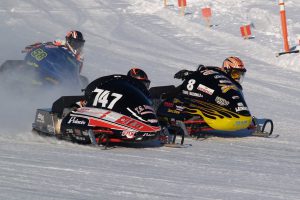
Performance snowmobiles are designed for one thing – to deliver best possible raw performance. They have powerful engines with high displacement capacity and are tuned for maximum top speed and acceleration. Riders who take part in professional racing or enjoy the thrill of high speed prefer these models over other types of snowmobiles. Performance Snowmobiles should only be purchased by snowmobile riders who have plenty of experience.

Utility Snowmobiles

Snowmobiles are not just used for commuting or racing. Some people also use them for carrying out work in the field and lugging goods. Utility snowmobiles are purchased by people who need the snowmobiles for carrying out their daily tasks. These snowmobiles have longer and wider frames than their counterparts. Their suspension is also designed for heavy duty workloads and can haul a decent amount of cargo. They also have a hitch for towing sleds behind them.

Crossover Snowmobiles

Crossover snowmobiles are designed to operate equally well on groomed trails as well as for off-trail exploration. Their main characteristic is their hybrid track that is longer and has medium-sized lugs (generally 1.25”). It yields excellent handling on groomed trails while providing adequate traction and power for off-trail riding. Crossover snowmobiles are a great choice for riders who love backcountry exploration.

Mountain Snowmobiles

Ascending a mountain slope with a snowmobile is harder than riding a snowmobile on a flat trail. Mountain snowmobiles are designed for specifically this purpose. They feature engines with high power output to provide adequate force for climbing inclined mountain slopes. The body of the snowmobiles is narrower for easy maneuvering on tight trails and their tracks have longer lugs for improving traction on slopes. They are not as comfortable as trail or touring snowmobiles and can’t reach the same top speed as performance snowmobiles. Mountain snowmobiles are not ideal for flat trails and should only be preferred by people who ascend and descend slopes regularly.

Youth Snowmobiles

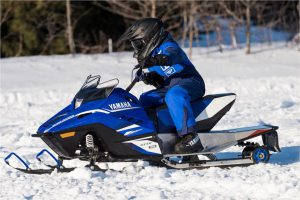
While trail snowmobiles are a great choice for adults who want to learn riding, they are not suitable for teenagers and young riders. Youth snowmobiles are designed specifically for teenagers and young riders. These snowmobiles have small frame and power-limited engines for ensuring safety of the riders. They are a great option for parents who want to take their children along with them on rides.
Filed Under: Types Tagged With: Crossover, Mountain, Performance, Touring, Trail, Youth

Youth Snowmobiles

April 8, 2018 by snowmobiles.org Leave a Comment

Snowmobiling is fun, but it requires training. The earlier a person starts practicing, the better they get at it. Also, parents cannot drag their children behind them forever because grown kids don’t find it cool and get bored. Youth snowmobiles are a great match for teaching young adults snowmobiling. They have low power engines with limited performance. Additional safety features are provided to protect the rider. Here are a few great youth snowmobiles offered by different vendors.

Arctic Cat ZR 120

Arctic Cat has been in snowmobile business for a decade and is aware of the customer’s needs. Their ZR 120 variant in their youth snowmobiles lineup provides a great platform to introduce children to snowmobiling. The four-stroke 123cc engine is the right mix of performance and reliability. It features youth-oriented fully active suspensions at the front and rear sides. The .75inch lugs generate traction for overcoming trails and drifts. Safety features include a tether chord and a safety flag. The hand and thumb warmers protect the child from the cold while a muffler stifles exhaust noise. Halogen headlight, 4inch windshield, and front bumper are stock features.

Yamaha SRX 120

The SRX 120 is the ideal Yamaha snowmobile to introduce a child to the sport. It has a four-stroke 123cc engine and a small lightweight chassis designed for young riders. The parents can control the top speed and acceleration of the snowmobile using the inbuilt speed control. Fully electronic ignition enables easy starting of the snowmobile. A keyed system prevents mischiefs from young riders. The centrifugal automatic clutch and a comfortable seat make the riding experience easier and secure. It comes with grip warmers and a rear storage compartment. Front and rear bumper are provided to protect the chassis from damage. The SRX 120 from Yamaha snowmobiles starts at $2,899.

Polaris Indy 120

Polaris is another renowned vendor of snowmobiles. The company is not far behind in the youth snowmobiles segment. Its Indy 120 is an excellent offering that comes with features that are at par with competitors. It has a single cylinder fan-cooled engine with a 121cc displacement capacity. A safety tether cuts off the engine in case the rider falls off. The throttle is adjustable allowing the adults to dictate the amount of power at the hands of the rider. It comes with a windshield and comfortable Mini Indy seat. The Polaris Indy 120 is available in an exciting Sonic Blue color.

Arctic Cat ZR 200

With time, children and young adults gain the experience and skills for snowmobiling. It might be the time to take things a couple of notches higher. The Arctic Cat ZR 200 is the ideal companion for it. The snowmobile comes with a more powerful 192cc four-stroke engine that can output 9HP. It is matched by the Arctic 200 Drive System that has a primary and a secondary clutch for increased performance. The front and rear suspension are fully active youth designs with 4.5inch and 8.5inch travel respectively. It has the Hayes hybrid breaking system for improved stopping power. The 1inch lugs on its Cobra track enhance handling capability and acceleration. Hand and thumb warmers, halogen headlight, tether switch, and a 4inch windshield are all stock features.

Yamaha Snoscoot

The Yamaha Snoscoot is another powerful alternative in the youth snowmobiles category. It comes with a fan cooled 4-stroke 192cc engine that packs quite a punch and is still quiet. A 2.2gallon fuel tank is adequate for beginners who are in the learning phase. A 90x10inch Cobra Track has 1inch lugs that lend agility and traction to the snowmobile. The front suspension is double wishbone type with independent left and right sides and the rear suspension is the slide rail type. They work in tandem with hydraulic twin tube shocks at both ends to make the ride feel plush and smooth. Disc brakes provide required stopping power. An electric start, trail certified halogen headlight, LED taillight, heated grips, and windshield are all standard. It is available in attractive blue and orange colors.

Filed Under: Youth Tagged With: Youth

Snowmobile Racing

April 8, 2018 by snowmobiles.org Leave a Comment

Snowmobile racing championships are held for adult and youth drivers. There are different types of races like the drag race, snowcross, oval race, water skipping and cross-country racing. A racing event consists of multiple qualifying rounds, semifinals (heat races) and finals (feature). Entrants in a race are classified based on their age and the class of the snowmobile they ride. Some categories only allow snowmobiles with stock components while others may permit limited modification. The governing body decides the participating age for each event. All snowmobile racing events have a set of rules. The race may be between individuals or teams comprising of multiple drivers. Majority of international snowmobile racing championships are organized during the months of winter.

Snowcross

Snowcross snowmobile racing is similar to motocross and the most popular one. The entrants compete on an ice track that involves banked corners and sharp turns. The riders travel at speeds easily over 50 mph and jump 20 to 30 feet in the air while racing along the course. The rider who finishes first is adjudged as the winner. Safety precautions are of utmost importance while competing in these events and the driver is required to wear braces and guards on almost every part of the body. Some of the popular snowcross events include the World Championship Snowmobile Derby, AMSOIL Snocross National, and the X Games.

Hill Climbing

Another popular snowmobile racing type is hill climbing. The event requires the drivers to climb a slope while following a predetermined trail. The driver that crosses the finish line first or in the least time is the winner. The race trail features various elevation changes, has multiple obstacles and twists and turns to test snowmobile rider’s skillset comprehensively. Climbing a mountain slope on a snowmobile is a challenging task and requires the right skill and expertise with years of practice. The Eagle Point Hill Climb held at Beaver and the World Championship Snowmobile Hill Climb t held at Jackson are hill climbing events.

Water Skipping

Besides being driven on ice and ground, snowmobiles can also go over water. Ridding a snowmobile over water requires the snowmobile to travel at a minimum speed which allows it to hydroplane. Snowmobile racing over water is known as water skipping. The riders are required to complete the course and the one that takes the shortest time wins. The water skipping event may consist of a drag race, an oval lap race or combination of different races. It is a challenging sport as reducing the throttle of the snowmobile will sink it. It is also known as watercross, water skimming, and puddle jumping. The World Championship Snowmobile Watercross is held in Wisconsin every year.

Oval/Lap Racing

Lap racing is one of the oldest snowmobile racing events. An oval track which is one mile long is used to hold the race. The competing drivers have to complete multiple laps of the track. The team or individual who completes the laps in minimum time is declared the winner. The number of laps that a team may be required to complete depends on the competition. The International 500 is one such event that requires the teams to make 500 laps of the one-mile track. It lasts for about eight hours. TLR Cup Tour is another oval racing championship.

Drag Racing

Drag Racing is one of the most popular snowmobile racing events. A two or four-laned ice or grass track is used for drag racing. The length of the track is 500ft. Snowmobile riders travel from start to finish point and compete to finish first. The drag race may consist of multiple rounds. The winner is the racer who takes minimum time. There are various drag racing categories at each event. There are international events centered around each of these. Hay Days is a drag racing event of snowmobiles.

Cross Country Racing

Cross Country events are the most challenging ones in the world of snowmobile racing. The events require participants to race over hundreds or thousands of miles on their snowmobiles across different parts of a state. Teams of two or more riders compete in cross country races. The events last for multiple days. The competing teams are provided adequate breaks in between. Cross country races test the physical and mental endurance of the participants. Iron Dog is a cross-country snowmobile racing event that requires participants to cover 2,031 miles across the state of Alaska.

Filed Under: Racing, Types Tagged With: Racing, snowmobile racing

Kids Snowmobile

April 7, 2018 by snowmobiles.org Leave a Comment

Snowmobiling is not just for adults. The top companies manufacture snowmobiles that are specifically designed and engineered for children. They are small, lightweight and have additional safety features. Their engines have low displacement capacity and power. The chassis and skis are engineered to make the experience easier. Kids snowmobiles are perfect to introduce children to the sport. These allow kids to accompany their parents on a family snow trip and have fun.

Kitty Cat Snowmobile

The Arctic Kitty Cat is at the top of the list when it comes to kid’s snowmobile. It is an acclaimed model that holds a special place in the hearts of people. It has a 60cc fan cooled engine under its hood that makes it ideal for small kids. Parents can limit the speed on the snowmobile to 8mph or less using the governor control. Its headlight and taillight are always on. A reflective tape makes the snowmobile more visible. The keyed ignition prevents accidental or unsupervised starts. Since its introduction in 1972, it has been the first snowmobile of many generations over the past few decades. Though no longer in production, it is still highly sought after in the kid’s snowmobile resale market. Kitty Cat is a great choice as the first snowmobile for kids.

Polaris 120 Dragon

The Polaris 120 Dragon is another great choice for parents browsing for kid’s snowmobile. It provides a comfortable ride, is easy to handle and has a plethora of safety features making it ideal for kids. The 120cc single-cylinder engine has 5hp which is peppy enough for kids. It comes with a tether strap that must be attached to the child and the switch. It shuts down the engine in case the child falls off the snowmobile. Always on headlight and taillight and a rear snow flap are standard. A governor spring allows the parents to control the speed. It was initially available in black and pink colors with flame graphics to suit children with different color preferences. A couple of years later a red dragon model was also introduced.

Yamaha SnoScoot SV80

The Yamaha SnoScoot Sv80 is a classic kids snowmobile. It has an 80cc two-stroke air cooled engine which is suitable for small kids without being too powerful. At just a little over 100 kg, the SnoScoot is lightweight and can be carried around in a vehicle. The snowmobile has independent front suspensions and slide-rail type rear suspension that give it a sporty feel. It may have an electric or kick start depending on the model. The red and black finish of SnoScoot makes it attractive for kids. The SnoScoot snowmobiles were in production from 1987 to 1991. They are still popular across the country.

Yamaha SnoSport SV125

The SnoSport Sv125 Yamaha is an improved version of the SnoScoot SV80. It features a more powerful 125cc two-stroke single-cylinder engine that employs air-cooling mechanism. The snowmobile is still lightweight at 115kg and easy to drive and handle. It has a swing arm front suspension with wide ski stance which mimics the feel of high-end performance snowmobiles. The model was introduced in 1990 and became immensely popular among as a kid’s snowmobile in America and Europe. It is a great choice for kids who have outgrown their 80cc snowmobiles.

Filed Under: Kids, Types Tagged With: Kids

  • « Previous Page
  • 1
  • 2

Recent Posts

  • Underglow Lights for Snowmobile – 2024
  • 3 Place Enclosed Snowmobile Trailer – 2024
  • Tilt Load Snowmobile Ramps – 2024
  • 10 Best Snowmobile Pants – 2024
  • 10 Best Snowmobile Suits – 2024

Pages

  • About Us
  • Contact Us
  • Privacy Policy

FTC Disclosure

snowmobiles.org is a participant in the Amazon Services LLC Associates Program, an affiliate advertising program designed to provide a means for sites to earn advertising fees by advertising and linking to Amazon.com.

Copyright © 2026